







Solana Yellowstone Geyser gRPC Quickstart
This guide shows how to connect a TypeScript or Rust application to an ERPC Solana Geyser gRPC endpoint using the open-source Solana Stream SDK. Use the endpoint assigned in your ERPC Dashboard and allow ICMP probes so ERPC can measure network latency to your registered IP. For plan and service details, see Solana Geyser gRPC.
Get your ERPC connection details
- Open the ERPC Dashboard, select your Geyser gRPC service, and copy your assigned streaming endpoint URL, including its scheme. The hostname in the sample repository is illustrative and is not a working customer endpoint.
- If you use the SDK samples below, provide an ERPC RPC API key for their
SOLANA_RPC_ENDPOINTsetting. That RPC URL supports the samples' auxiliary RPC/latency lookups; it does not replace the streaming endpoint. - Allow the ICMP sources in the next section so ERPC can measure latency to your registered IP for region selection. The SDK example templates contain a placeholder
X_TOKEN: replace it only if your assigned endpoint requires token authentication; otherwise delete that line from the copied.envfile. A token sent to a remotehttp://endpoint is unencrypted; usehttps://when transmitting a token.
You can use the Solana Stream SDK in an existing application or run its TypeScript/Rust sample clients directly. Installing SLV is optional.
Allow ICMP latency-probe sources
For gRPC region selection, ERPC sends ICMP latency probes to your registered IP from the proxy hosts listed below. Allow inbound ICMP echo requests from every listed source IP. If they are blocked by a firewall (ufw, cloud firewall, security group, etc.), the measurement can become
9999ms and a non-optimal region may be selected. Multiple IPs in one region are separate probe hosts; all of them are required.Run a Solana Stream SDK sample
The Solana Stream SDK provides standalone TypeScript starters under
temp-release/ that install the published SDK 4.0.0, plus Rust sample clients under client/. Clone once and choose one of the language-specific paths below. Each set of commands starts from the repository root immediately after cloning:bash
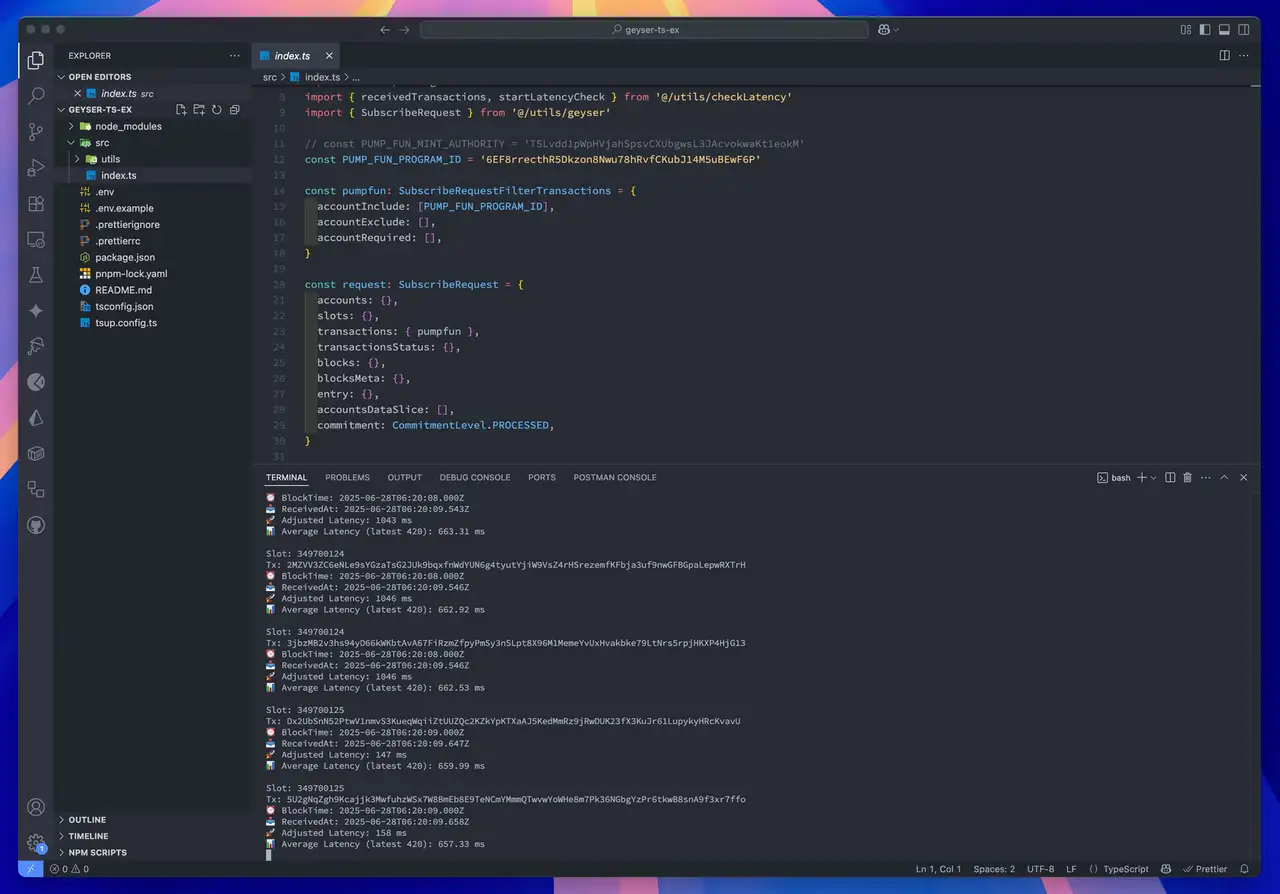
TypeScript: Yellowstone Geyser gRPC
Use the standalone Geyser TypeScript starter, Node.js 22 or 24 and pnpm. It depends on the published SDK rather than unbuilt native workspace packages. From the repository root, enter the starter and copy its
.env.example:bash
env
Run from inside the standalone starter directory:
bash
Rust: Yellowstone Geyser gRPC
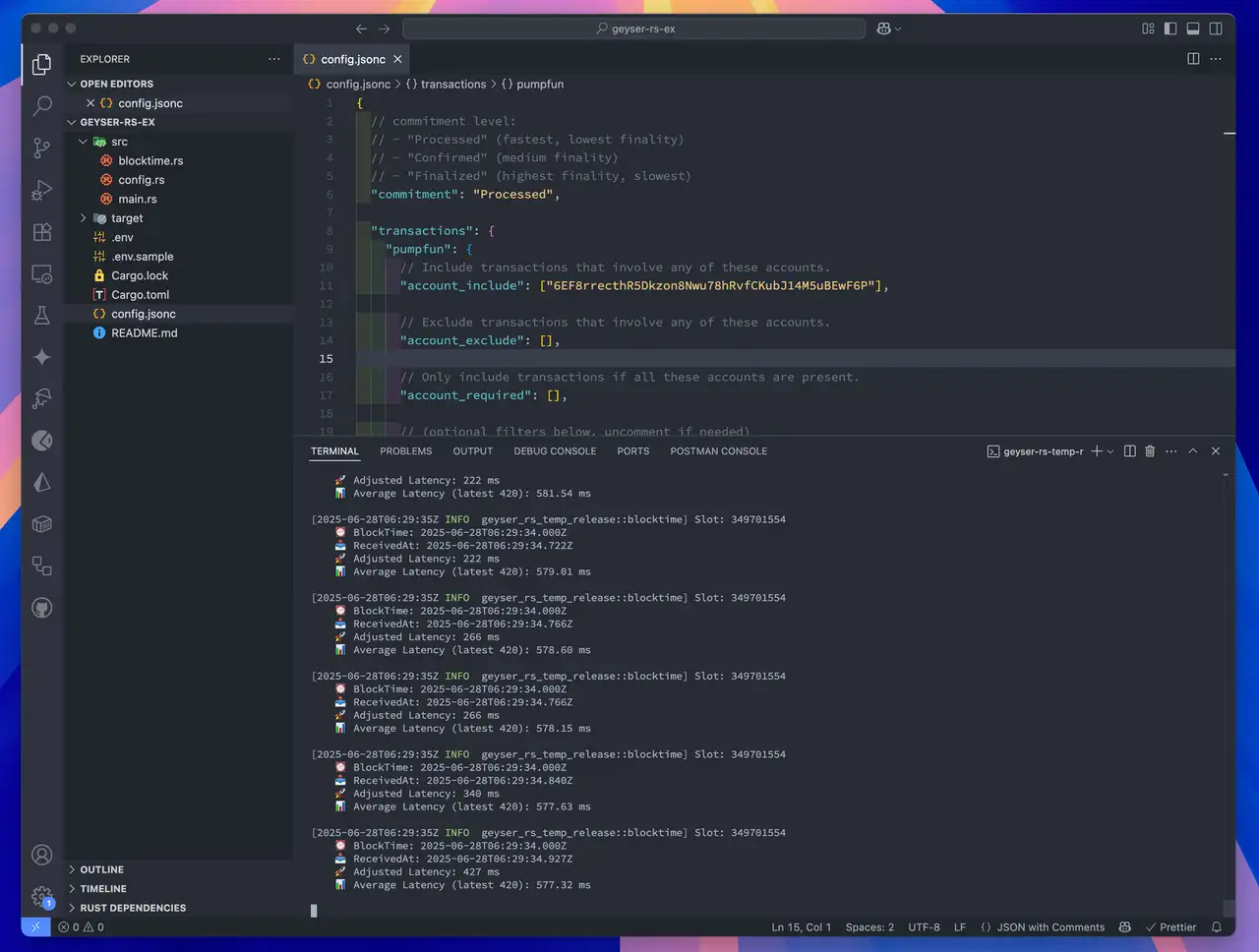
The Rust example uses
GRPC_ENDPOINT, not GEYSER_ENDPOINT. Its checked-in template is .env.sample (unlike the TypeScript example). Copy it and provide your actual values:bash
env
Review the example's
client/geyser-rs/config.jsonc subscription filters, then run:bash
Optional: Generate a standalone starter with SLV
If you prefer an interactive template generator instead of cloning the SDK repository, use SLV. It is not required to connect to ERPC.
bash
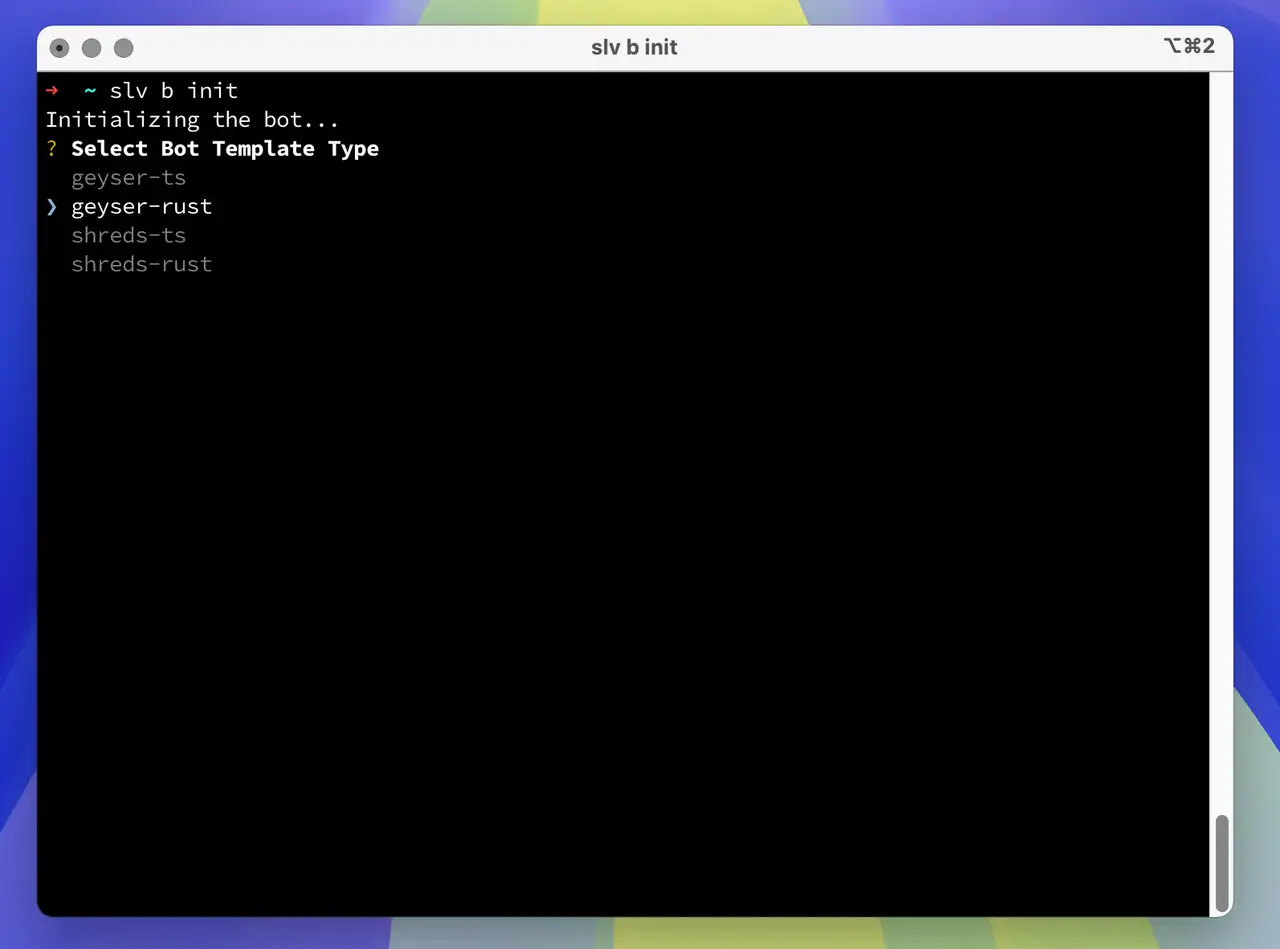
Choose
geyser-ts for TypeScript or geyser-rust for Rust.
Configure the generated project's environment variables with the assigned ERPC endpoint and your own RPC key before running it. The CLI is a convenience for obtaining a starter, not an ERPC account setup step.Solana Stream SDK

The open-source Solana Stream SDK provides the Yellowstone Geyser gRPC client implementations used in these examples. Follow the sample repository's current README and its SDK 4.0 migration guidance when integrating the SDK into an existing application.
For access, subscriptions and endpoint settings, return to the ERPC Dashboard.